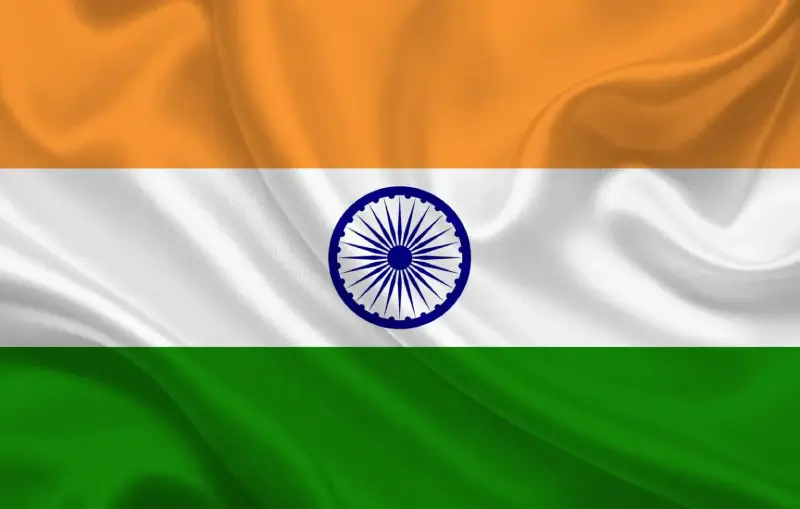
🇮🇳 Tiranga: The Pride of India
The Tiranga, also known as the Indian National Flag, is not just a piece of fabric; it is the symbol of India’s unity, sovereignty, and freedom. Representing the dreams, hopes, and struggles of over a billion people, the Tiranga flies high as a testimony to the nation’s rich history, its democratic foundations, and its commitment to peace and progress.
This tricolor flag has witnessed India’s transformation from a colonized nation to one of the world’s largest democracies.
Historical Origins of the Tiranga
The history of the Indian National Flag traces back to the early 20th century, during India’s struggle for independence from British rule. Before the final version of the Tiranga was adopted in 1947, several flags were used by Indian nationalists.
The first national flag is said to have been hoisted in 1906 in Kolkata, featuring three horizontal stripes—green, yellow, and red—with symbols like the lotus and the sun.
In 1921, a version was proposed by Pingali Venkayya, a freedom fighter from Andhra Pradesh, who played a key role in conceptualizing the current flag. Mahatma Gandhi suggested the inclusion of the spinning wheel (charkha) in the center, symbolizing self-reliance and Swadeshi.
After much discussion and evolution, the present version was adopted on July 22, 1947, just before India’s independence, by the Constituent Assembly of India.
Design and Symbolism
The Tiranga is a horizontal tricolor of deep saffron (Kesari) at the top, white in the middle, and dark green at the bottom, with the Ashoka Chakra (a navy-blue 24-spoke wheel) at the center of the white band.
1. Saffron (Kesari)
- Represents courage and sacrifice
- Reflects the spirit of renunciation and selflessness
- Honors the valiant freedom fighters of India
2. White
- Denotes peace, purity, and truth
- Acts as a moral compass for the nation
- Represents the path of righteousness
3. Green
- Symbolizes growth, fertility, and prosperity
- Represents India’s agricultural roots
- Reflects faith and harmony
4. Ashoka Chakra
- Inspired by the Lion Capital of Ashoka at Sarnath
- 24 spokes represent continuous progress
- Symbolizes dharma, justice, and motion
Protocol and Respect for the Tiranga
The Flag Code of India, introduced in 2002 and updated in 2022, outlines the rules for displaying the national flag with dignity.
- The flag must never touch the ground or water
- No flag should be placed higher than the Tiranga
- It should be displayed respectfully on clothing or objects
- Khadi, cotton, silk, wool, and polyester are permitted
The flag is proudly hoisted on national occasions such as Republic Day (26 January), Independence Day (15 August), and Gandhi Jayanti (2 October).
Role During India’s Freedom Struggle
The Tiranga was a powerful symbol during India’s freedom movement, representing unity across religions, languages, and regions.
Leaders like Mahatma Gandhi, Bhagat Singh, and Subhas Chandra Bose used the flag to inspire millions to fight for self-rule. The charkha emphasized economic independence and Swadeshi ideals.
The Tiranga Post-Independence
After 1947, the Tiranga became a permanent symbol of India’s identity and is displayed during national events, military parades, government functions, and international ceremonies.
It is also draped over the bodies of soldiers and martyrs as a mark of supreme honor and sacrifice.
Tiranga and Patriotism
The Tiranga evokes deep patriotism and pride. Whether at international sports events, global summits, or national celebrations, its presence fills every Indian heart with emotion and responsibility.
The Har Ghar Tiranga Campaign
Launched in 2022 under the Azadi Ka Amrit Mahotsav, the “Har Ghar Tiranga” campaign encouraged citizens to hoist the national flag at their homes, strengthening public connection with national values.
Tiranga in the Indian Armed Forces
For the Indian Armed Forces, the Tiranga is sacred. Soldiers salute it daily and pledge their lives to protect the nation under its banner—from the heights of Siachen to disaster relief zones.
Artistic and Cultural Influence
The Tiranga inspires Indian art, music, cinema, and literature. Patriotic songs, films, paintings, and school projects keep its legacy alive for future generations.
International Recognition
The Tiranga is recognized worldwide as a symbol of democracy, peace, and progress. It proudly represents India at global summits, Olympic podiums, and even in space missions.
Conclusion
The Tiranga is more than a national flag—it is the soul of India. It reminds us that despite diversity, we stand united as one nation, under one flag.
Respecting the Tiranga means respecting the values of freedom, unity, and responsibility that define India.